within 24
Hrs +
60
Days Free API Panel
WhatsApp API White Label vs Reseller: Key Differences, Pricing & Which to Choose
Too Long? Read This First
- Confused between WhatsApp API White Label vs Reseller? Not anymore. Confused between WhatsApp API White Label and Reseller? Not anymore. White Label Partnership lets you launch under your own brand with full pricing control, while Reseller offers a ready-made platform with a faster start and lower investment. Compare both WhatsApp Business API models and choose the one that fits your business goals.
chat_bubble
Want To Send Bulk SMS?
If yes, then test our service for FREE.
Want To Send WhatsApp Msg?
If yes, then test our service for FREE.
code
Get a Free Trial of WhatsApp API
White Label vs Reseller? Are both just two names for the same thing? It isn’t. Then why do both seem the same for most businesses? The misconception is because both let you offer the WhatsApp Business API without creating anything from scratch, since access comes through Business Solution Providers (BSPs) approved by Meta. However, the difference between the two models lies in branding, pricing control, customer ownership, and profit potential.
What Is a WhatsApp API Reseller?
WhatsApp API Reseller is a software provider or agency that sells WhatsApp Business API services on behalf of an official provider (a BSP) and earns a commission or margin on every sale.
How the Reseller Model Works
Let’s understand how the reseller model of WhatsApp works by learning about it step-by-step.
| Step | What Happens | Who Handles It |
| 1: “Sign up” as a WhatsApp API partner | Join the provider’s reseller program, usually with little or no upfront cost | You |
| 2: Bring in clients | Buy API access at a discounted rate or refer customers to the provider | You |
| 3: Technology and compliance | API access, Meta approvals, uptime, the messaging platform, and technical support | Provider |
| 4:Earn your margin | Your income is the difference between the partner rate and your selling price, or a fixed percentage on each client’s usage. | You |
Pros and Cons of Reseller Model
| Pros | Cons |
| Low investment and quick start | Provider’s brand stays visible to clients |
| No maintenance or technical setup required | Less or no control over pricing and margins |
| Lower risk, since you pay mainly what you sell | Profit is primarily a dependent factor and is capped by the provider’s commission structure |
| Easy way to test demand before scaling | Harder to build a long-term brand of your own |
Quick Tip: The reseller model can be the easiest way to start selling the WhatsApp business API; however, the selling excludes branding and pricing control for that convenience.
What is a WhatsApp API White Label Solution?
A WhatsApp API white label solution is a ready-to-use messaging software, created by a Business Solution Provider (BSP), which you can rebrand or sell as your own. As a white-label provider, clients see your logo, your pricing, and your domain. You own the brand and the customer relationship, yet on the backend, the provider handles the technology and Meta compliance.
How the White Label Model Works
| Step | What Happens | Who Handles It |
| 1. Choose a white label provider | In this model, you partner with a Business Solution Provider that offers you a rebrandable WhatsApp API platform | You |
| 2. Set up your branding | Your logo, brand name, domain, and dashboard are configured on the platform | You, with the provider’s help |
| 3. Set your own pricing | You create your own plans and add your markup on top of Meta and provider charges | You |
| 4. Onboard and manage clients | You sell to clients, manage their accounts, and handle first-level support | You |
| 5. Infrastructure and compliance | API access, Meta approvals, uptime, security, and backend support | Provider |
Quick tip: As the clients interact with your brand, the provider stays invisible to them.
White Label Model: Pros and Cons
| Pros | Cons |
| Full branding: your logo, domain, and dashboard | Higher upfront investment than reselling |
| Complete access of markup and pricing | Longer setup time before you can launch |
| You own the customer relationship and data | You handle first-level client support |
| Your Profit increase as you scale | Needs a team for sales, billing, and client management |
| A stronger, long-term brand and name of your own | Results depend on how well you market and sell |
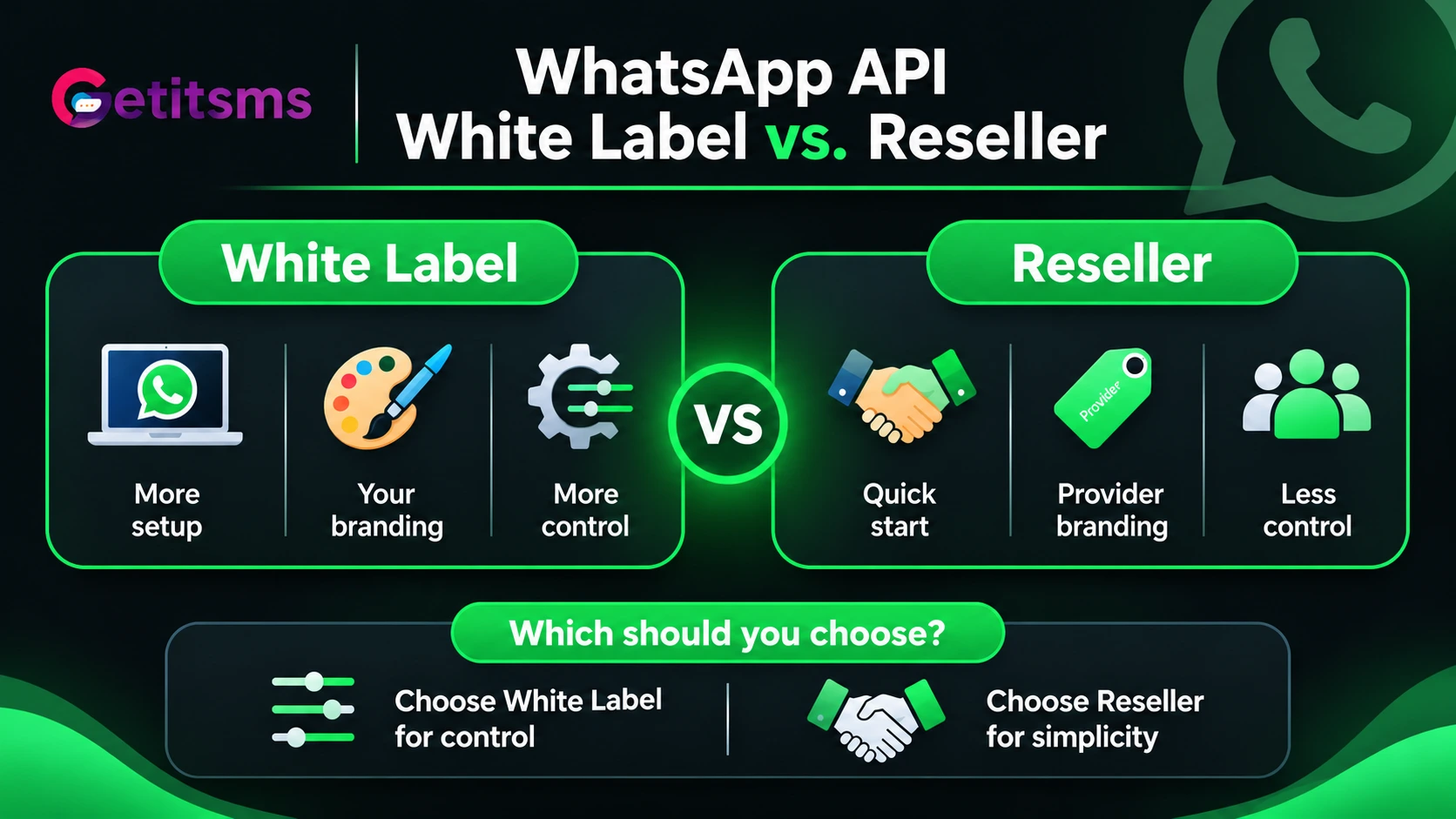
WhatsApp API White Label vs Reseller: Key Differences
Let’s clear up the misconception by explaining why and how White Label differs from Reseller.
| Factor | WhatsApp API Reseller | WhatsApp API White Label |
| Branding | Provider’s brand is visible to clients | Your own logo, brand name, and domain |
| Pricing control | Limited. Provider sets the base rates; you earn a fixed margin or commission | Full. You set your own plans, markup, and packages on top of Meta and BSP charges |
| Customer ownership | Often shared with, or visible to, the provider | You own the customer relationship, billing, and data |
| Support responsibility | Provider handles most technical and customer support | You handle first-level support; a dedicated account manager assists you on the backend |
| Investment required | Low. Minimal or no upfront cost | Moderate to high. Setup or platform fees may apply |
| Profit potential | Moderate. Margins are capped by the provider’s commission structure | High. Margins depend on your own pricing and scale |
| Scalability | Limited by the provider’s reseller terms and brand | Highly scalable, as you control plans, clients, and growth |
| Best suited for | Freelancers, consultants, and small agencies testing the market | SaaS companies, large agencies, and telecom or SMS resellers building a long-term brand |
Quick Tip: Go with the reseller model if you are looking for a low-cost, quick start with minimal responsitlity and choose white label if you want full branding, pricing control, and higher long-term profit.
Which Model Should You Choose?
The model you should choose is totally your call and should be compared taking your budget, goals, and, more importantly, how much control you want over your brand and pricing. Let’s answer these five questions to decode which model fits you better.
| Question | Leans Reseller | Leans White Label |
| What is your budget? | Limited | Ready to invest in setup and a platform |
| How important is your own brand? | Not a priority right now | Essential |
| Do you want to set your own prices? | Fixed margins are fine | Yes, full control |
| Do you have a team for client support? | No, I do prefer the provider to handle it | Yes, I can manage first-level support |
| What is your goal? | Test the market or earn extra income | Build a long-term, scalable business |
Quick Tip: If most of your answers support the first column, then go for reseller; however, if it directs you towards the second column, then go for white label. A mix of both is common, and many businesses begin as resellers and move to white label once they have proven demand.
Conclusion
Hence, choosing between White Label vs Reseller is totally your call depending on what fits your goal. However, if you are still confused and want to start with little or no risk, start as a reseller; and if you are ready to build your brand and your own customer relationships, white label is your call to action. Whichever model you choose, GetItSMS makes the world of bulk messaging easy.
So, are you ready to get started with the WhatsApp Business API? Talk to the GetItSMS team and book your free demo now; we’ll help you choose the model that suits your business.
Frequently Asked Questions
The WhatsApp Business API, created by Meta, is an enterprise level, programmable interface designed for medium-to-large businesses to help send notifications, alerts, and campaigns, run automated chats, and connect multiple agents or systems, all under one roof: Business Solution Provider (BSP).
Not actually. Adopting a reseller model will only allow you to sell the provider’s service under the provider’s brand, so clients see the provider’s name, platform, and dashboard.
Yes, you can. With a white-label partnership you can sell with your own logo, domain, and dashboard, and you set your own pricing, while the provider’s technology runs in the background.
Yes, many buyers do. They start with low risk reselling which allow them to test demand with low investment, and you can move to white label once you are ready to build your own brand.
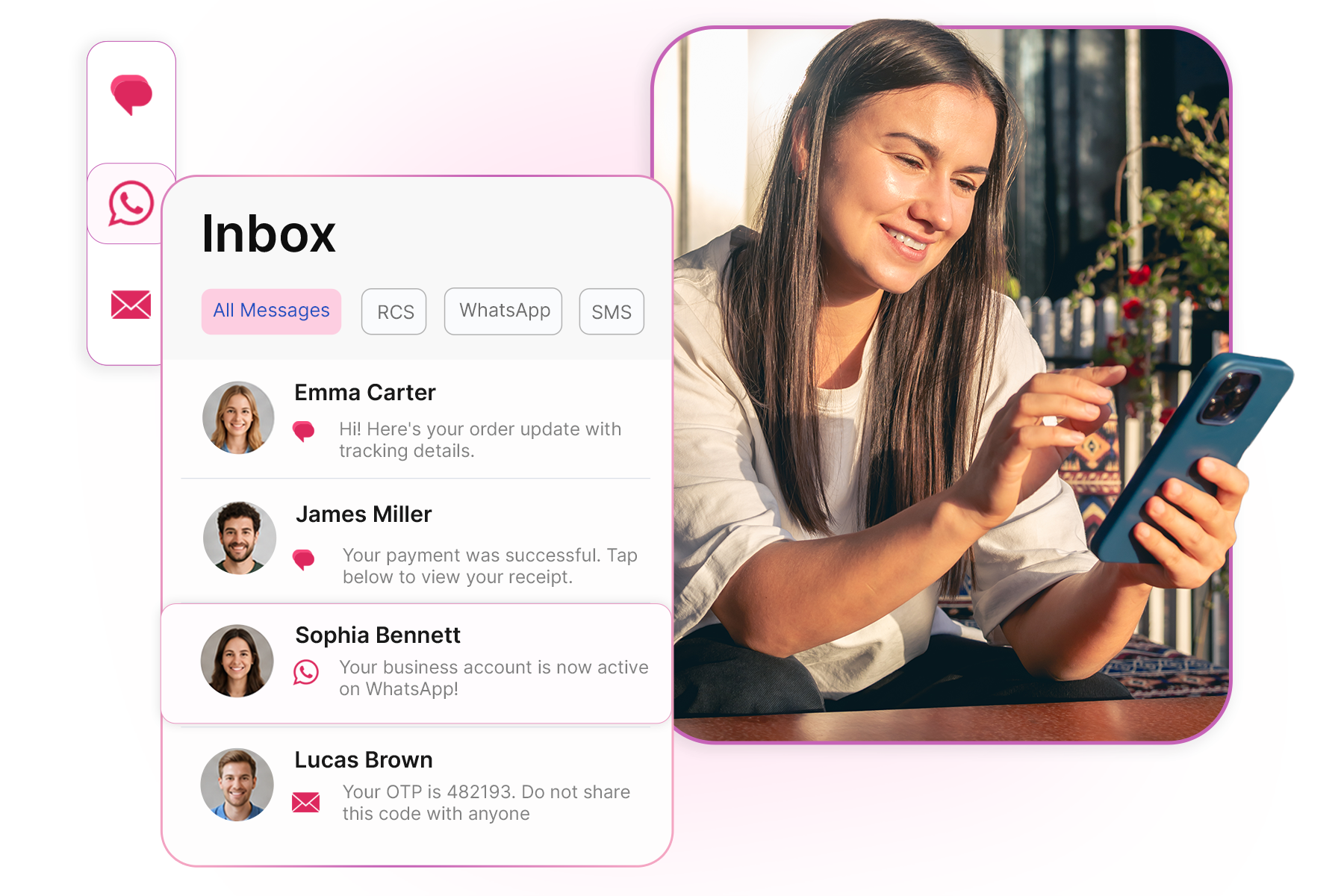
Get your business on WhatsApp with GatitSMS
Try for freeRecent Posts