

 within 24
Hrs +
60
Days Free API Panel
within 24
Hrs +
60
Days Free API Panel
RCS Messaging vs. SMS – What’s the Difference
 3 minutes read
Last Updated :
August 21, 2026
Too Long? Read This First
- RCS Messaging vs. SMS comes down to trade-offs. SMS offers universal reach and works on cellular mobile networks, while RCS delivers rich-media and interactive media support over data or Wi-Fi.
- SMS works great for OTPs, banking alerts, and critical notifications with guaranteed delivery that matters more than visual appeal.
- RCS messaging is next-generation text messaging that works best for marketing campaigns and product launches, and an interactive customer experience.
- The smartest strategy is to use both together. Use RCS for rich engagement with automatic SMS fallback to ensure no messages fail to deliver.
- If you want to run RCS and SMS from one place, omnichannel platforms like GetItSMS help you get started within minutes while offering RCS, Bulk SMS, WhatsApp API, and Voice support in one place.
chat_bubble
Want To Send Bulk SMS?
If yes, then test our service for FREE.
Want To Send WhatsApp Msg?
If yes, then test our service for FREE.
code
Get a Free Trial of WhatsApp API
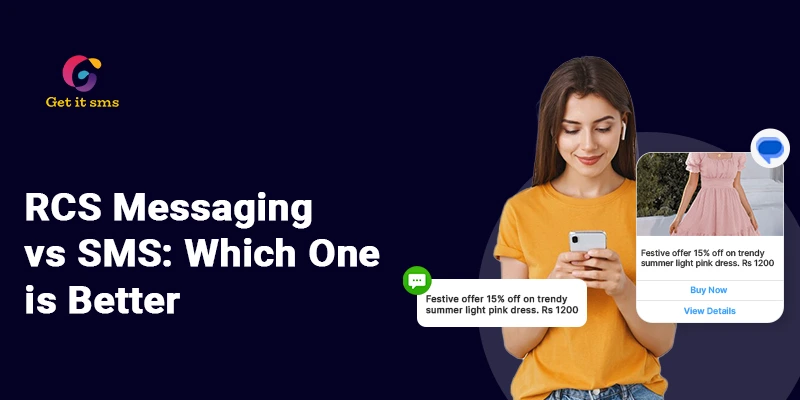
RCS Messaging vs. SMS is among one of the biggest debates in business communication as brands seek a better way to engage with customers. RCS adoption is growing rapidly, and support is extending across both Android and iPhone devices, offering brands an interactive way to reach customers.
Whereas SMS has been a go-to channel for businesses to send OTPs, reminders, and promotional messages for more than 30 years. It is simple, reliable, and easily works across every device.
This often leads to businesses wondering whether traditional SMS is still enough or it’s time to switch to a richer messaging experience. RCS is often called next-generation SMS, and most customers prefer an interactive experience over SMS. Does it mean SMS is outdated? Not really.
In this blog, we will learn the key differences between RCS messaging and SMS along with their key features, benefits, use cases, and help you find the best channel for your business needs.
What is SMS Messaging?
SMS stands for Short Message Service. It is an original messaging format to send messages over a cellular mobile network instead of an internet connection. This messaging channel has been around since the 1990s and remains one of the most widely used forms of mobile messaging globally.
- Character limits: You can send a short message up to 1650 characters.
- Plain text only: Does not support images, videos, audio files, or rich media.
- Carrier-based delivery: Use cellular networks instead of the internet or WiFi.
- Universal support: Works across every mobile phone and carrier globally.
- Support OTPs and alerts: It is ideal for sending time-sensitive messages like login codes and appointment reminders.
- High deliverability rate: SMS reaches every customer instantly without any internet connection needed.
This simplicity is what makes SMS still work. For businesses, SMS remains one of the most reliable channels for business communication with an open rate of 98%. It works best for sending bulk SMS like OTPs, delivery alerts, appointment reminders, and payment confirmation. It is also the fallback channel that keeps the richer formats like RCS from ever failing to deliver.
What is RCS Messaging?
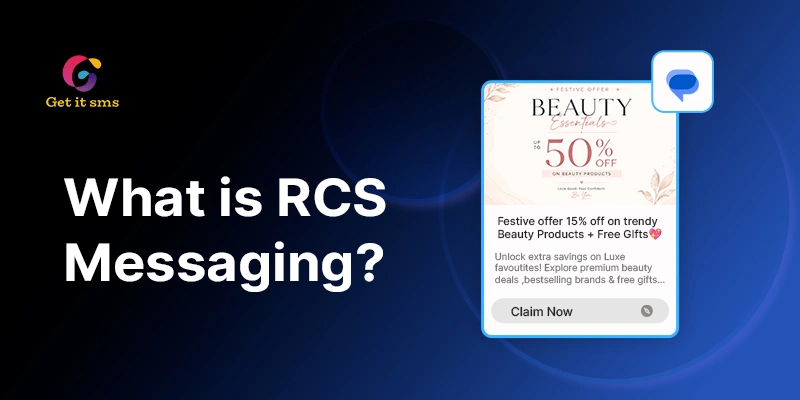
Rich Communication Services messaging is a modern, upgraded version of traditional SMS. It brings the app-like features directly to your phone’s default messaging app. This means no need to download any new app or create a new account.
Unlike SMS, which runs on your carrier’s cellular network, RCS works over mobile data or Wi-Fi. This makes it easier for brands to send richer and more interactive messages similar to what WhatsApp delivers. Here are some of the key features of RCS messaging:
- Rich Media: Send high-resolution images, video (up to 100MB), and audio clips.
- Live Status Indicators: Real-time indicators to know when the other person is typing and when they have read your text.
- Interactive Elements: Add quick-reply buttons, carousels, and one-tap action links for booking and tracking orders.
- Advanced Group Chats: Manage group chats seamlessly by easily adding or removing members.
- Longer text limit: Write long messages far beyond the 160-character limit of basic SMS.
- Verified sender branding: Businesses can display a verified name, logo, and checkmark to know who is texting.
RCS messages work over data or Wi-Fi instead of the cellular network. It means both the sender and the recipient need an active data connection to send and receive messages.
For businesses, RCS opens up new opportunities inside the message app by offering rich media support, browsing carousels instead of plain text, and action buttons. RCS still depends on device and network support, and that’s the reason why businesses pair it up with SMS fallback instead of replacing SMS entirely.
RCS Messaging vs. SMS: Quick Comparison Table
| Feature | RCS Messaging | SMS |
| Full Form | Rich Communication Services | Short Message Service |
| Message Length | Virtually unlimited | 160 characters per message |
| Internet Requirement | Requires mobile data or Wi-Fi | Does not require internet |
| Images & Videos | Supports high-quality images, videos, GIFs, and documents | Limited support through MMS |
| Read Receipts | Yes | No |
| Typing Indicators | Yes | No |
| Interactive Buttons | Yes | No |
| Verified Business Profile | Yes | No |
| Branding Options | Business logo, colors, and verified sender name | Text-only sender ID |
| Product Carousels | Yes | No |
| Analytics & Tracking | Detailed engagement insights | Basic delivery reports |
| Group Chats | Advanced group messaging features | Limited group messaging |
| Security | Verified sender profiles and improved authentication | More vulnerable to spoofing and phishing |
| Customer Engagement | High due to rich and interactive content | Moderate due to text-only format |
| Device Compatibility | Supported on modern Android devices and iPhones with RCS support | Works on all mobile phones |
| Best For | Marketing campaigns, customer engagement, promotions, and support | OTPs, alerts, reminders, and critical notifications |
| Cost | Generally higher but offers better engagement | Usually lower and highly cost-effective for mass messaging |
SMS remains the ideal choice for universal reach, OTPs, and time-sensitive notifications. While RCS messaging is great for brands that need richer and branded customer interaction with higher engagement and a better conversion rate.
RCS Messaging vs. SMS for Business Communication: 8 Major Differences
Learning the difference between RCS messaging vs. SMS helps brands choose the right communication tool for their brand. Here’s a detailed comparison:
1. Message Format
SMS supports only simple text messages, which makes it suitable for simple communication. On the other hand, RCS messaging supports rich content like images, videos, GIFs, carousels, and branded messages for a more engaging experience.
2. Character Limits
SMS messages are limited to 160 characters per message. Longer text can be split into multiple messages. At the same time, RCS messaging
supports up to 3,072 characters for more detailed interaction.
3. Delivery Method
SMS is delivered via cellular networks and works without an internet connection. RCS Messaging uses mobile data or Wi-Fi to enable advanced messaging features and richer interaction.
4. Real-Time Conversation Updates
SMS offers limited delivery information and does not show whether your messages have been read or if the recipient is typing. While RCS messaging offers a live status indicator that allows businesses to know when a customer has opened a message and is responding.
5. Integrations
SMS uses the carrier’s cellular network to send messages, and integrations with other applications and services are limited. However, since RCS uses IP like most other mobile applications, it has more opportunities to integrate with other messaging services and business tools, including CRM systems.
6. Branding Opportunities
SMS has limited branding capabilities; it’s only possible to use a sender ID. RCS messaging enables brands to show the consumer their logo, brand name, and verification badge to help foster trust.
7. Interactive Buttons
Typically, customers are required to manually enter a response into SMS or tap on an external link. Unlike RCS messaging, which allows for quick reply buttons, call buttons, website links, and action buttons to make it easier for the customer to interact with your business.
8. Analytics and Tracking
Simple sms message offers basic delivery reports with limited insights. RCS provides more advanced analytics to track key metrics like message opens, read rates, button clicks, and customer engagement rate.
9. Security
SMS messages provide no encryption, leaving the possibility open for message interception, tampering, and a general lack of confidentiality. RCS messaging comes with verified business profiles and stronger authentication features.
10. Reach and Compatibility
SMS is compatible with any mobile phone, worldwide. This makes it the most easily accessible messaging channel. RCS will need to have supported devices and carrier support, but its adoption continues to increase rapidly.
RCS Messaging vs. SMS: Cost Comparison for Businesses
Cost is among the most deciding factors when it comes to choosing RCS and SMS. Here’s their cost factor comparison:
| Cost Factor | SMS | RCS |
| Setup Cost | Lower | Higher |
| Campaign Cost | Lower | Higher |
| Engagement Value | Medium | High |
| ROI Potential | Good | Better |
Which Offers Better Value?
SMS costs less upfront and per messages that makes it a safer choice for high-volume messages and alerts. While RCS costs more to set up and send, its rich-media support and interactivity drive better engagement per message.
For businesses running marketing campaigns and aiming at higher engagement, stronger branding, and improved conversion rates, RCS messaging can offer better long-term value despite the higher cost. If you’re looking for the most cost-effective communication, SMS is the way to go for your brand.
RCS Messaging vs. SMS: Which One Should You Choose?
Your final choice mainly depends on your business goals and the types of messages you want to send. Both channels have their own strong and weak points.
Choose SMS If You Need:
- OTPs and verification codes
- Banking and transaction alerts
- Emergency notifications
- Maximum reach across all mobile devices
When compared to RCS, SMS messaging is more reliable, instant, and works virtually on every mobile phone without any internet connection required.
Choose RCS If You Need:
- Marketing campaigns
- Product launches and promotions
- Rich media content such as images and videos
- Interactive customer experiences with buttons and carousels
RCS helps brands create more engaging conversations, drive higher customer interaction, and deliver a rich customer experience.
Best Strategy: Use Both Together
Rather than choosing one over the other, businesses can combine both channels in their marketing strategy. Use RCS messaging for rich and interactive customer engagement. And use SMS as a fallback when RCS is not supported on the customer’s device.
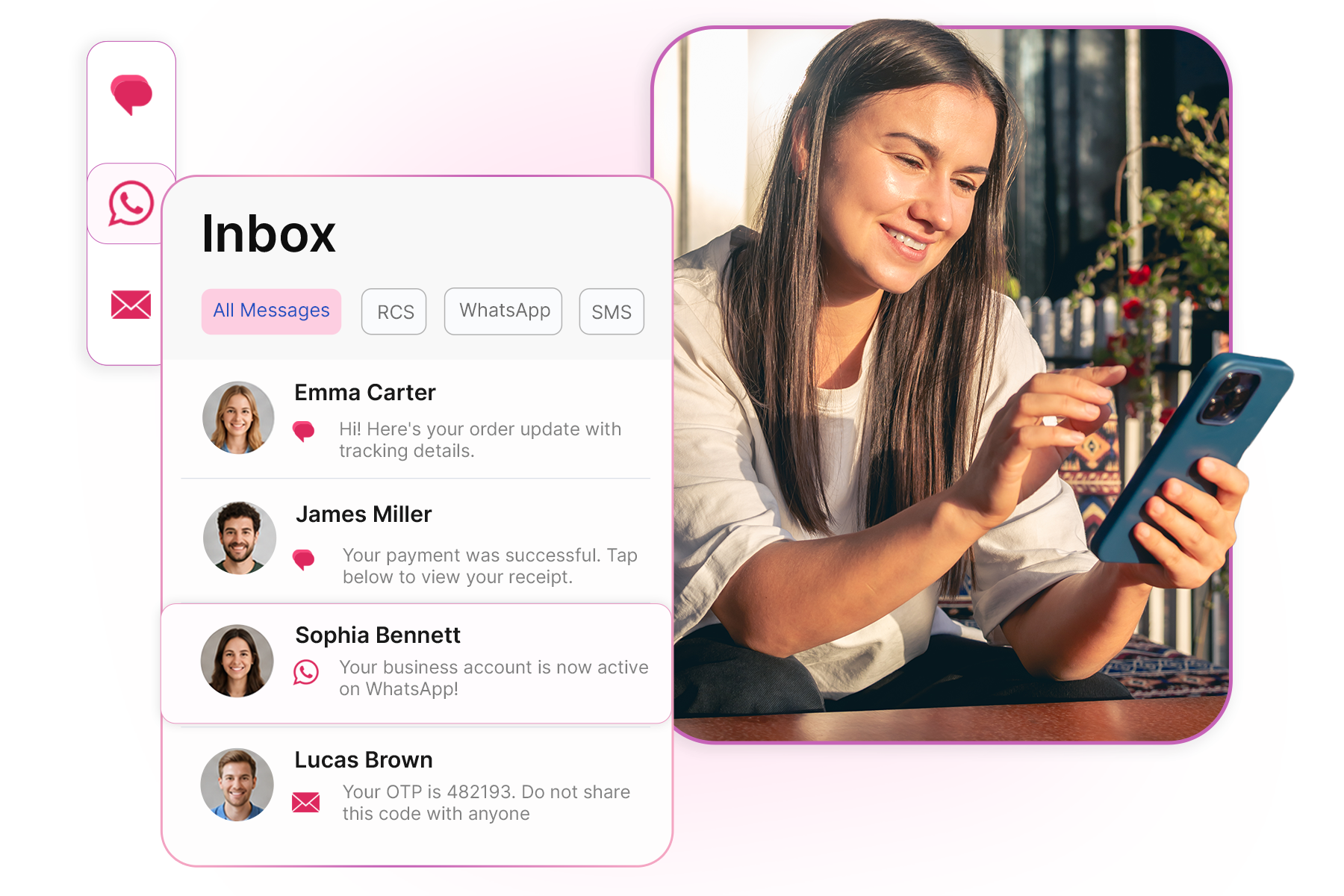
This will allow businesses to reach their maximum audience, engage them at the right time, and ensure their messages are always received. Businesses can easily integrate this approach into their marketing strategy via GetItSMS. It is an omnichannel platform that offers RCS messaging, Bulk SMS, WhatsApp Business API, and Voice solutions in a single place. It enables brands to manage all conversations from a single dashboard.
Conclusion
RCS Messaging vs. SMS is not about choosing one channel and ignoring the other. Both platforms play their own role in today’s business communication. SMS remains a cost-effective option for businesses to send OTPs, alerts, and notifications with universal reach and reliability. RCS text messaging delivers a richer customer experience with a branded sender ID, interactive buttons, rich-media support, and real-time engagement features. The smartest approach for companies is to use both channels together.
Use RCS to deliver an engaging experience and SMS as a fallback to make sure each message reaches the customer without any delivery failure. This combination not just boosts customer engagement but also improves campaign performance and increases conversion rate. So if you also want to manage RCS messaging along with Bulk SMS, GetItSMS is a perfect omnichannel solution to get started with to deliver a seamless customer experience.
Frequently Asked Questions
RCS is a more evolved messaging service that supports multimedia sharing, read receipts, and typing indicators. Meanwhile, SMS is a simple text-messaging service with a 160-character limit and no multimedia support.
Yes. Receiving RCS messages is completely free. However, businesses have to pay for sending them to their customers.
No. SMS will stay as the universal fallback channel. RCS does add richness over it, but SMS’s simplicity and reach are something that keeps it essential for reach.
Yes. Most businesses already start using this hybrid strategy. They use RCS for interactive customer engagement, and SMS serves as a backup channel for guaranteed delivery. A platform like GetItSMS helps you send both using a single omnichannel solution.
Yes. Apple supports RCS messaging starting with iOS 18. Now, businesses can send RCS messages on Android and iPhone as well.
Get your business on WhatsApp with GatitSMS
Try for freeRecent Posts